See Forever: a city reborn
Elevators soar, curtains lift, and New York unfolds from river to ocean.
Table of Contents
Origins of the site & skyline

Here at the southern edge of Manhattan, the island narrows to a prow—pointing toward the harbor, the Statue of Liberty, and the Atlantic horizon. For centuries, ships arrived and departed from piers that stitched New York to the wider world. Financial exchanges, warehouses, and neighborhoods rose and fell with waves of migration and industry, and the skyline grew in purposeful layers of steel and glass.
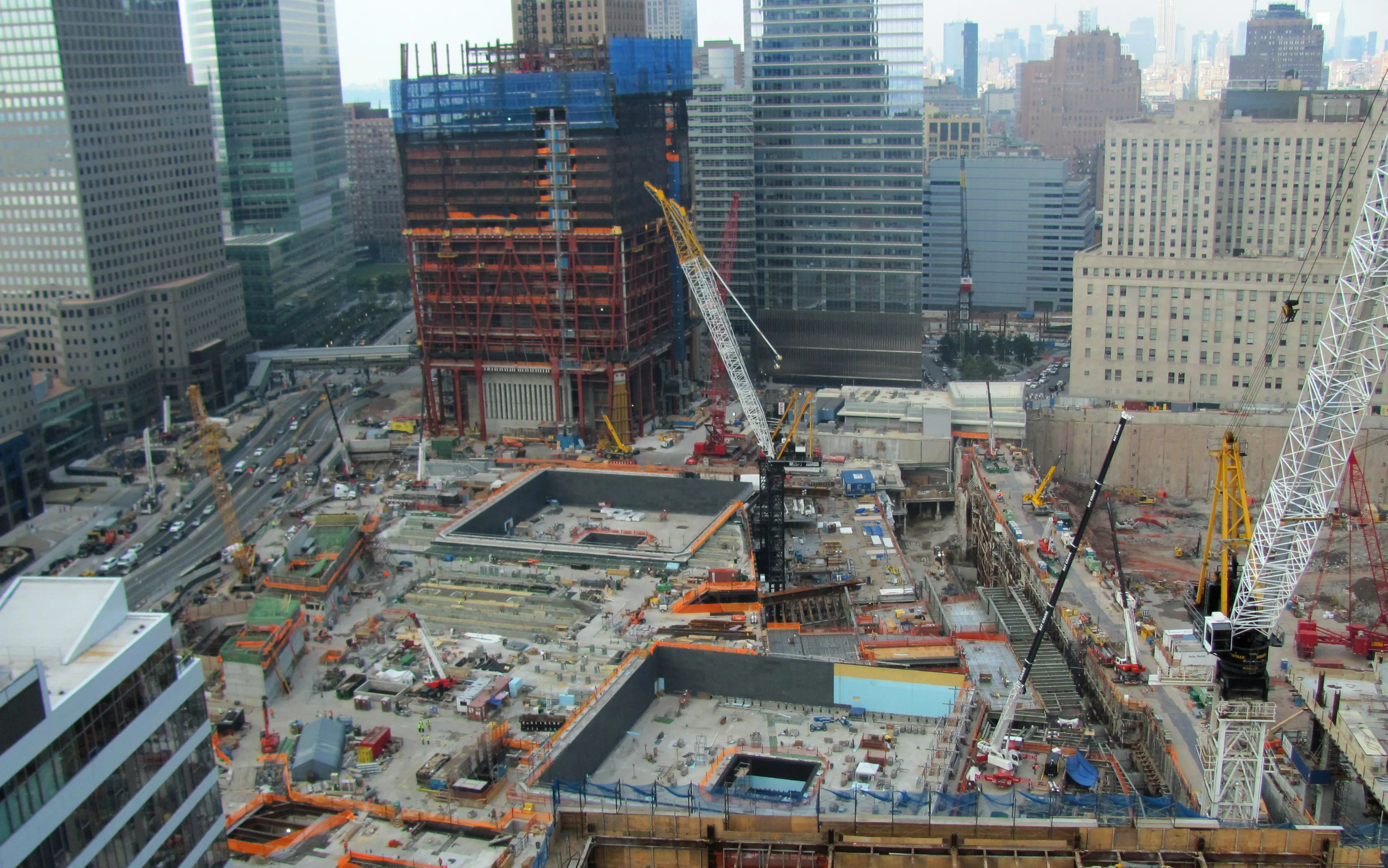
From this vantage point today, you trace the story of the city by sight: the grid fanning north, bridges lacing boroughs together, ferries drawing chalk‑white lines across water, and neighborhoods forming a mosaic of cultures. Below, the World Trade Center campus blends architecture and memorial spaces, inviting visitors to look outward with curiosity and inward with reflection.
One World Trade Center: design & ascent

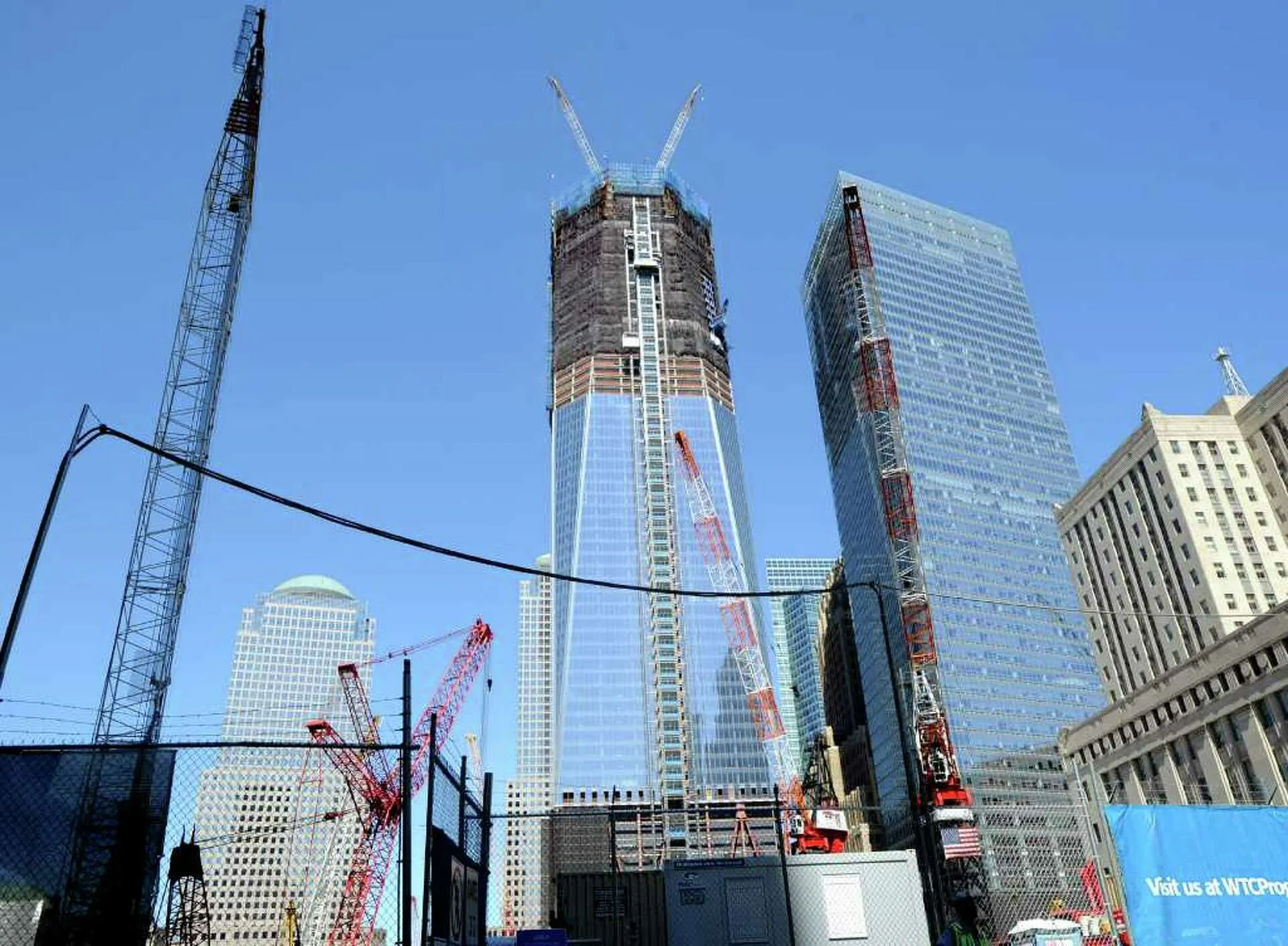
One World Trade Center, designed by Skidmore, Owings & Merrill, anchors the rebuilt World Trade Center site as a symbol of resilience and openness. A crystalline form rises from a square base, twisting into an octagon and tapering toward a glass spire. Its height—reaching a symbolic 1,776 feet—nods to the year of American independence while its engineering integrates strength, safety, and state‑of‑the‑art sustainability.
As the tower climbed, its crown took shape as a place to look out and reconnect with the city’s expanse. The Observatory opened with an experience that mirrors New York’s energy: an ascent that compresses centuries into seconds, a theater reveal that pairs cinematic flair with real‑time views, and floors where stories from the streets below meet open sky.
The Observatory experience
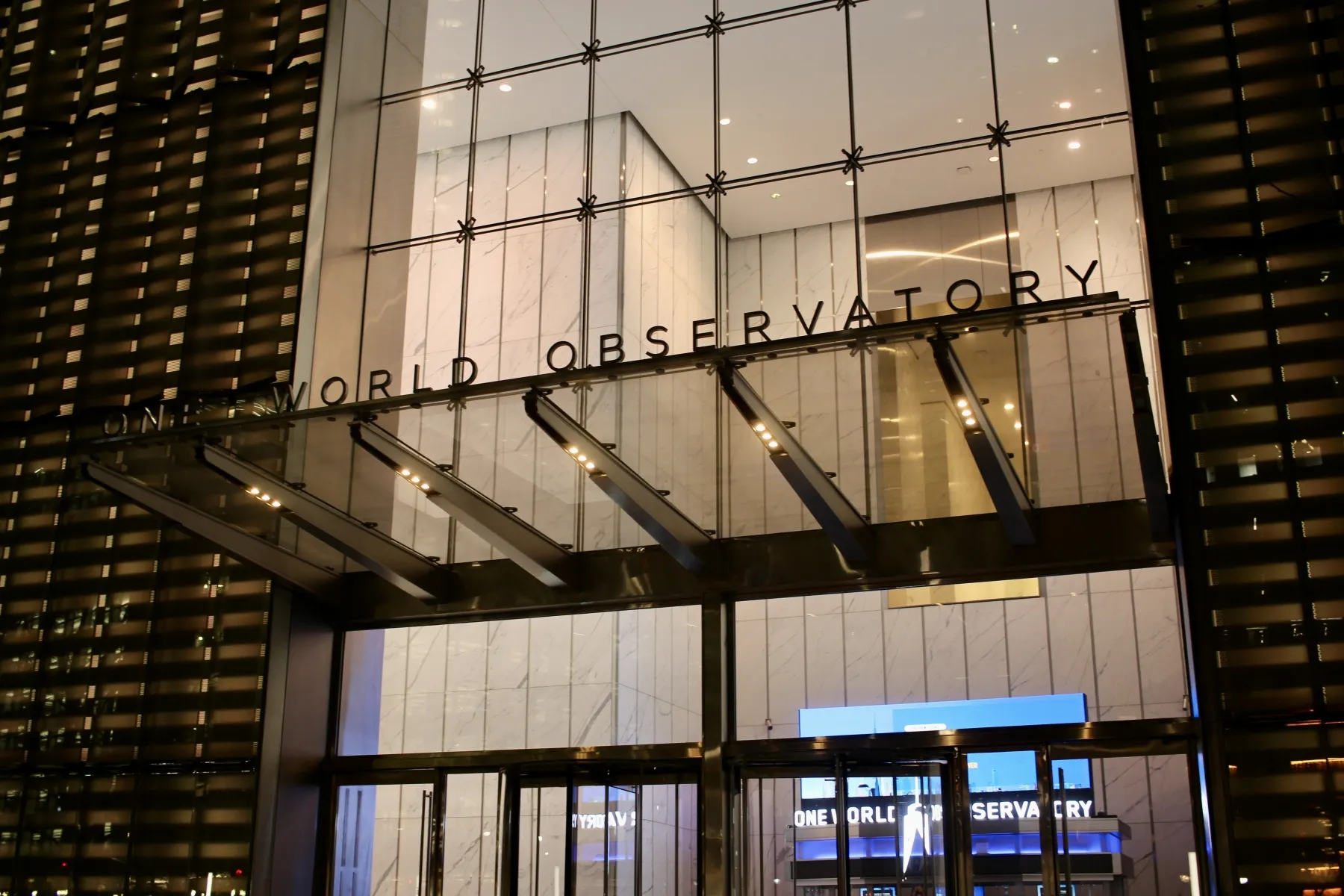
Your visit unfolds as a smooth sequence: friendly wayfinding through the World Trade Center campus, a swift security check, and then the Skypod elevators—wall‑to‑wall visuals whisk you upward as the city grows beneath you. Doors open to the See Forever Theater, where light, sound, and motion charge the atmosphere before the curtains lift and the real skyline unfurls.
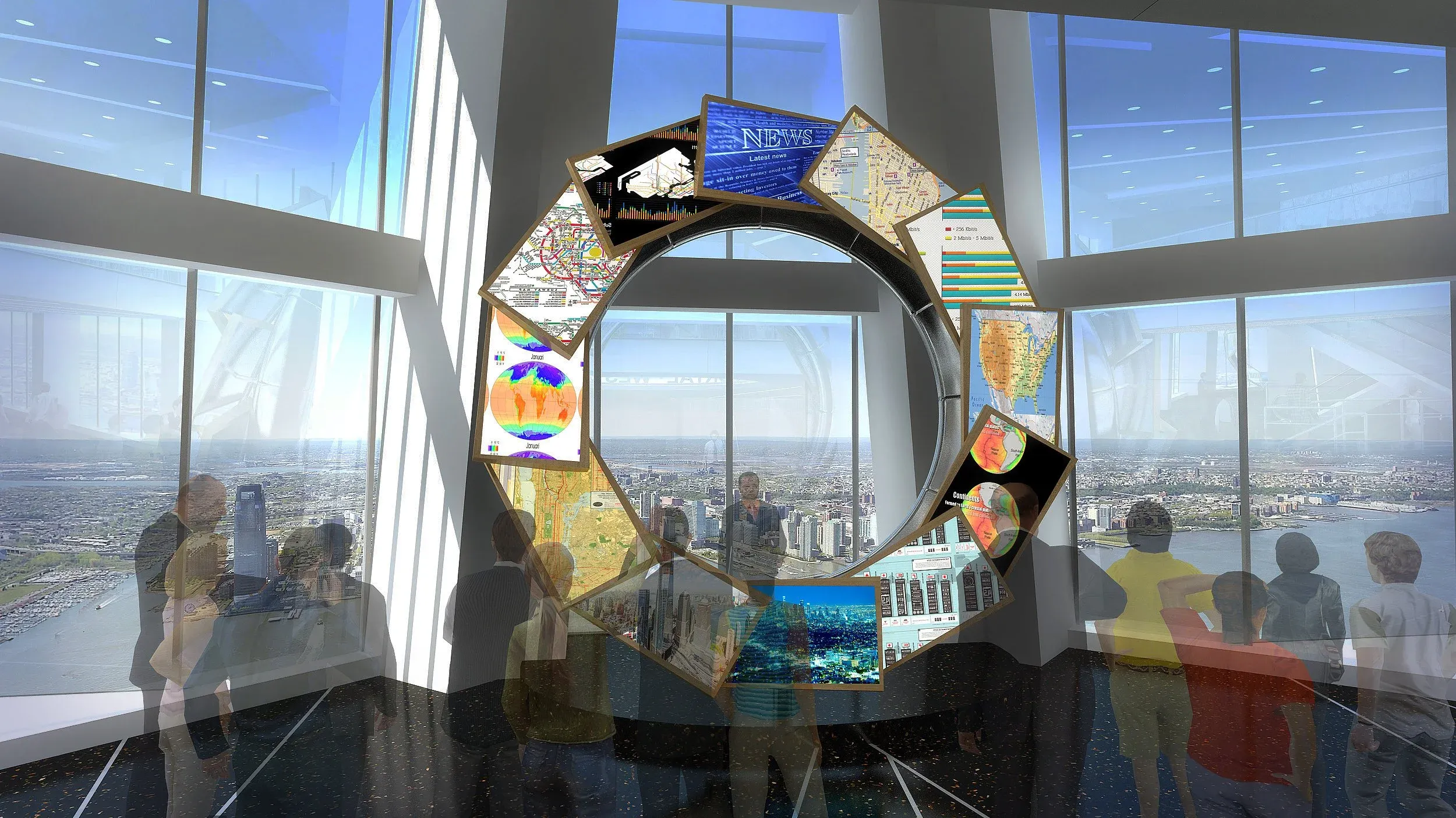
On the observation floors, the city becomes a map you can walk: bridges to the east, the harbor to the south, the Palisades and beyond to the west. Ambassadors at City Pulse point out neighborhoods and landmarks, updating the view with stories—from food scenes and music haunts to architectural highlights and moments in New York’s history. It’s part orientation, part celebration, and entirely New York.
Technology: Skypod & See Forever
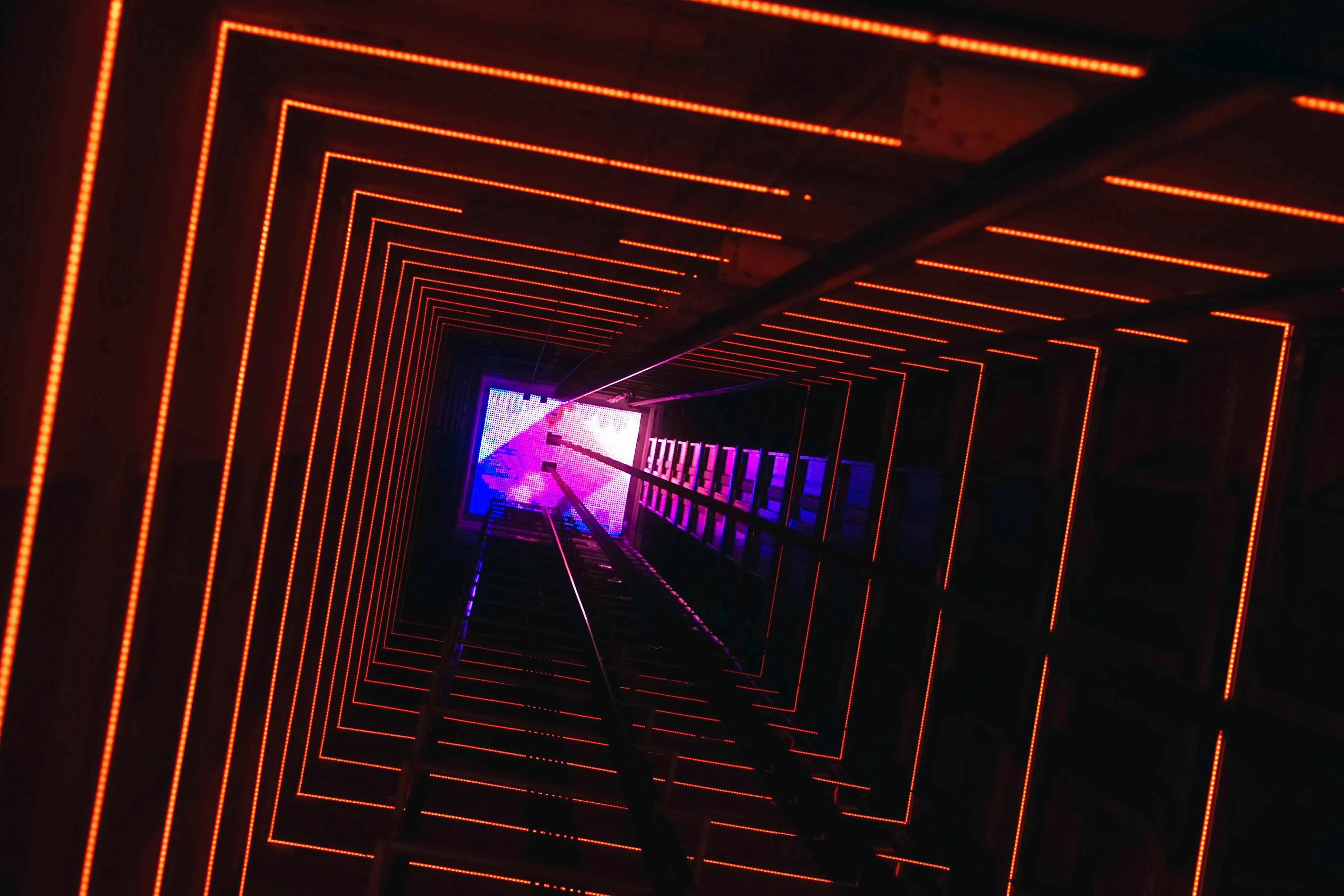
The Skypod system climbs 102 stories in under a minute. As you rise, immersive screens sketch New York’s skyline growth—from low‑rise shoreline to skyscraper capital—making the elevator ride a time capsule of urban transformation.
In the See Forever Theater, a short, high‑energy sequence blends music, motion, and city scenes. The finale is a favorite: the reveal slides away and the actual skyline appears—no special effects needed. You step out to 360° views where the city itself is the spectacle.
Neighborhoods beneath your feet
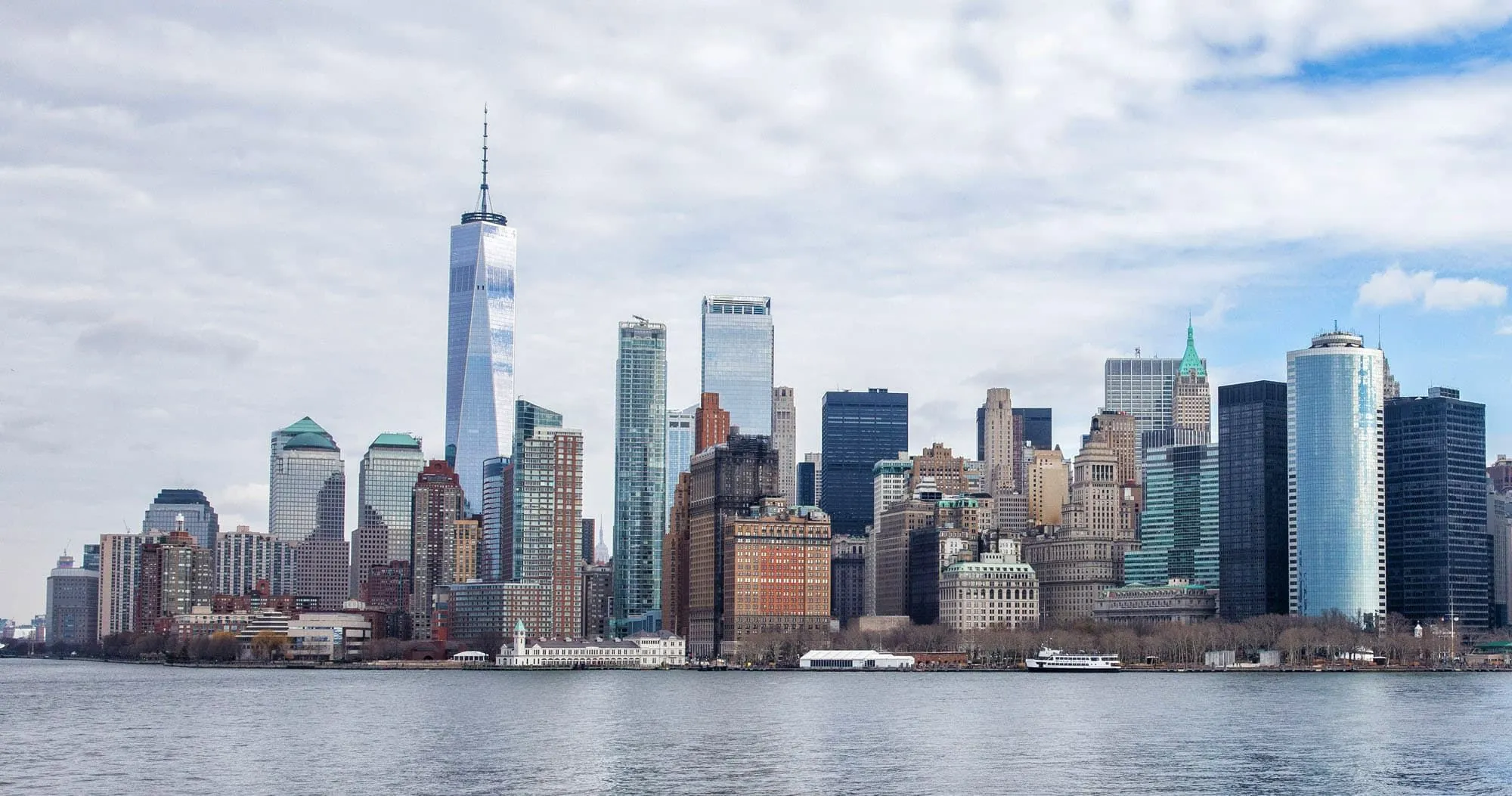
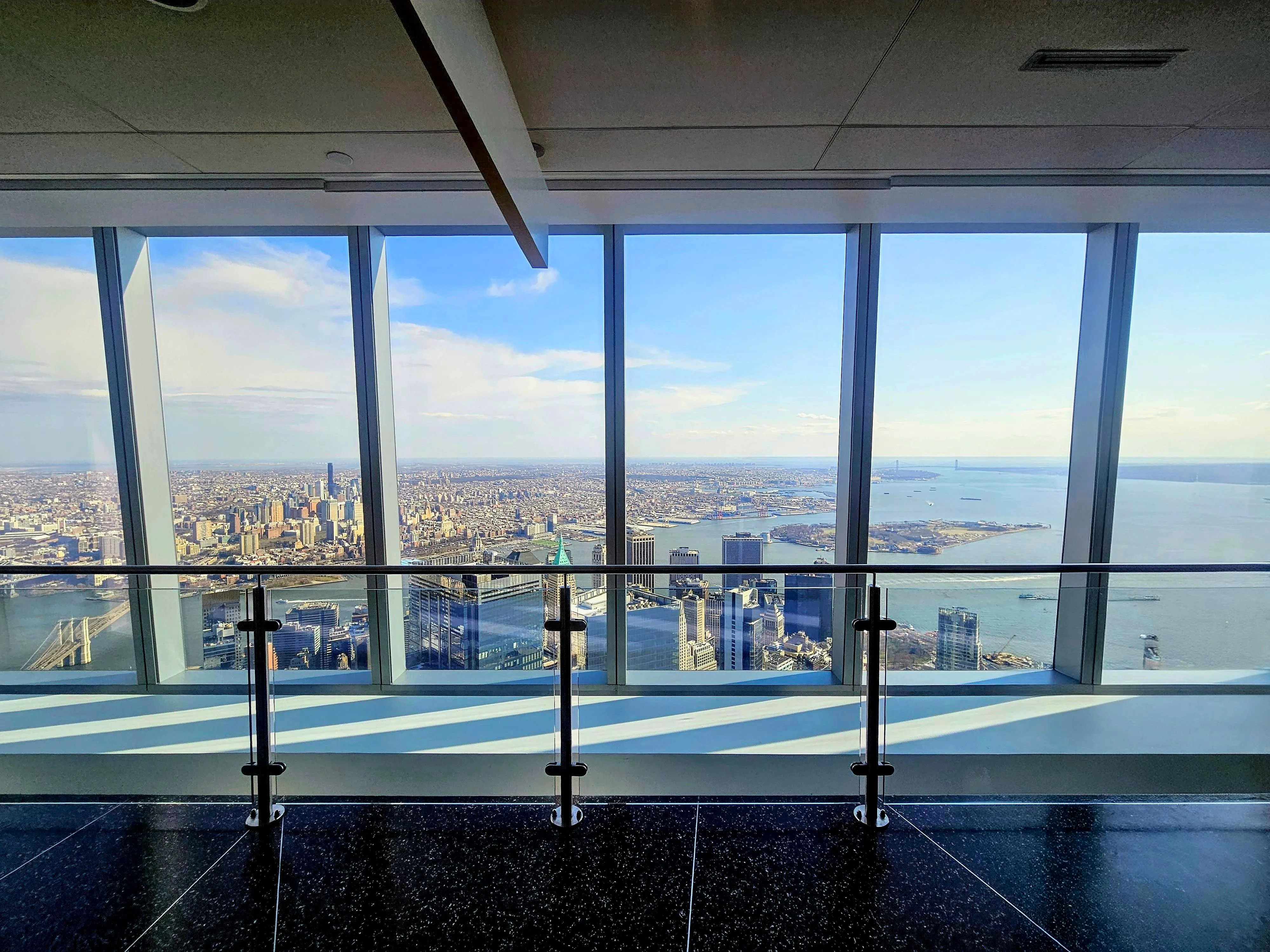
Directly below lies a patchwork of neighborhoods: Tribeca’s cobblestones and warehouse lofts, SoHo’s cast‑iron façades, Chinatown’s bustling streets, and the canyons of the Financial District. To the east, the Brooklyn and Manhattan Bridges arc across the river; to the south, ferries skip toward Staten Island and Liberty Island; to the north, the Empire State Building and Midtown rise like beacons.
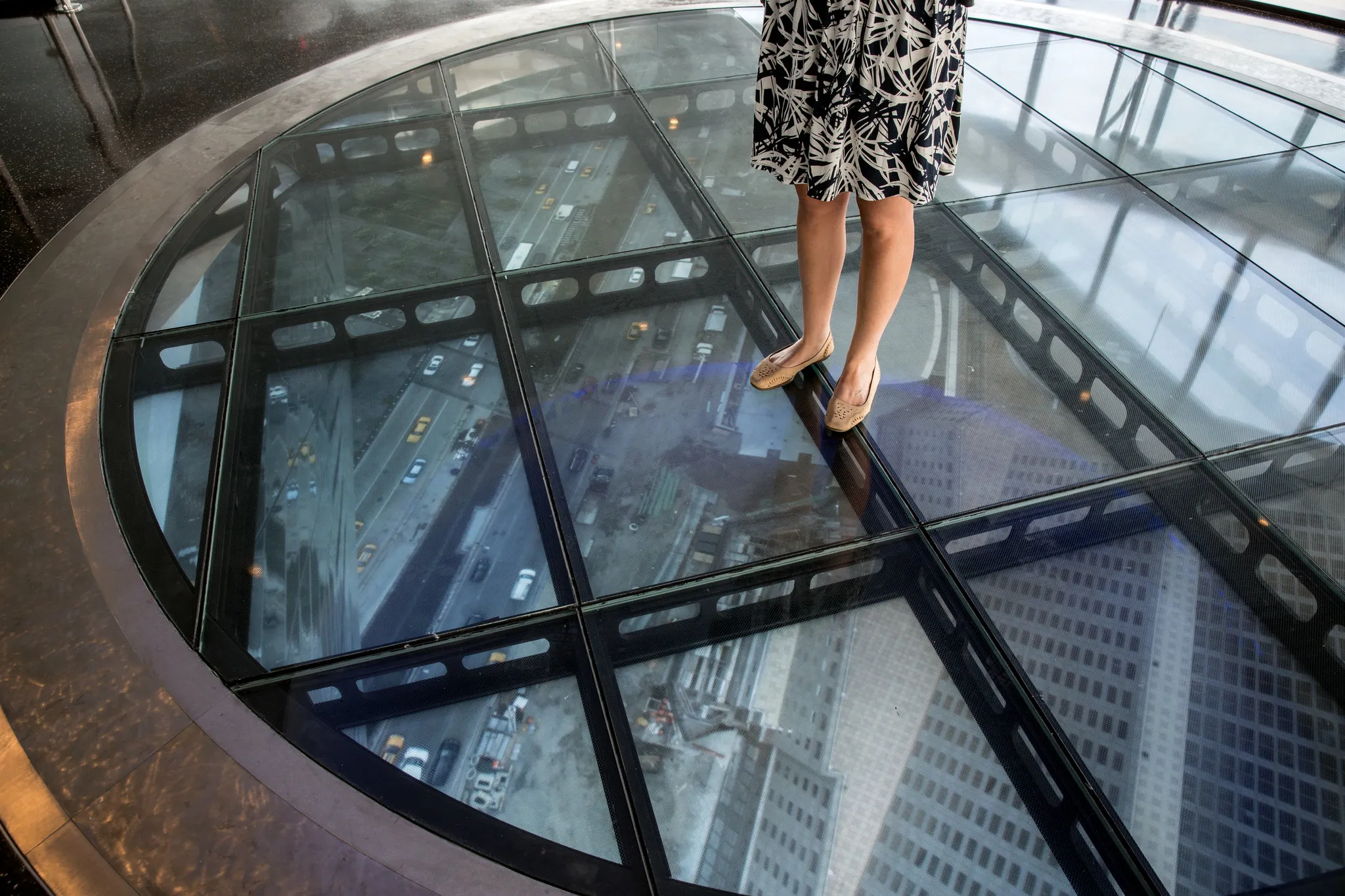
From 1,250 feet, the city’s daily rhythms become visible—the shift of light across rooftops, tiny yellow taxis threading avenues, ballfields and pocket parks punctuating the grid. You don’t just see New York; you understand how it works as a living, breathing organism.
Architecture, art & meaning
The World Trade Center campus brings together architecture and art in a layered environment. The Oculus by Santiago Calatrava rises like a white winged form over a multilevel transit hub. Public art animates plazas, and pathways connect offices, shops, and memorial spaces with waterfront promenades. The effect is civic in spirit—designed for movement, reflection, and daily life.
For many visitors, the area carries profound meaning. The Observatory looks outward over the city’s future while the memorial below honors lives and legacies. It’s a place where people gather to look, remember, and keep moving—New York style.
Transit & access in Lower Manhattan
Lower Manhattan is one of the best‑connected corners of the city. The Oculus links PATH trains to multiple subway lines, while Fulton Center gathers A/C/2/3/4/5/J/Z a short walk away. Street‑level wayfinding and elevators make navigating the campus straightforward for all visitors.
If you’re arriving from New Jersey, PATH trains glide directly to WTC. From uptown, frequent subways head downtown along Broadway and Seventh Avenue. Buses serve Church Street, West Street, and nearby corridors for crosstown or local rides.
Safety, accessibility & visitor flow
The full experience—from entry and security to elevators and observation floors—supports accessible routes. Staff can assist with elevators and seating when needed; restrooms and amenities are designed for ease of use.
Like many landmark attractions, the Observatory manages crowd flow with timed entry. Arriving early and traveling light streamlines your journey. Operational adjustments may occur during severe weather or special events—always check live updates.
Moments, seasons & special events
Every season paints the skyline differently. Winter brings crystalline clarity, spring reveals fresh greens along parks and waterfronts, summer sunsets stretch into glowing blue hours, and autumn turns treelines to amber against steel and glass.
Occasionally, special events and commemorations animate the campus and the city at large. Check the calendar for extended hours, seasonal programming, or unique skyline moments.
Tickets, passes & planning
Book timed entry online to secure your slot and choose upgrades that match your pace—priority lanes, flexible rescheduling, or bundled experiences.
City tourist passes may include Observatory access or discounts. Compare benefits and blackout dates to find the best fit for your trip.
Sustainability & operations

One World Trade Center integrates sustainable design and robust building systems—from efficient mechanicals to smart glass—supporting comfort, safety, and reduced environmental impact.
Operationally, timed entry and digital ticketing help manage visitor flow, while staff training keeps experiences smooth even at peak hours.
Nearby landmarks & museums
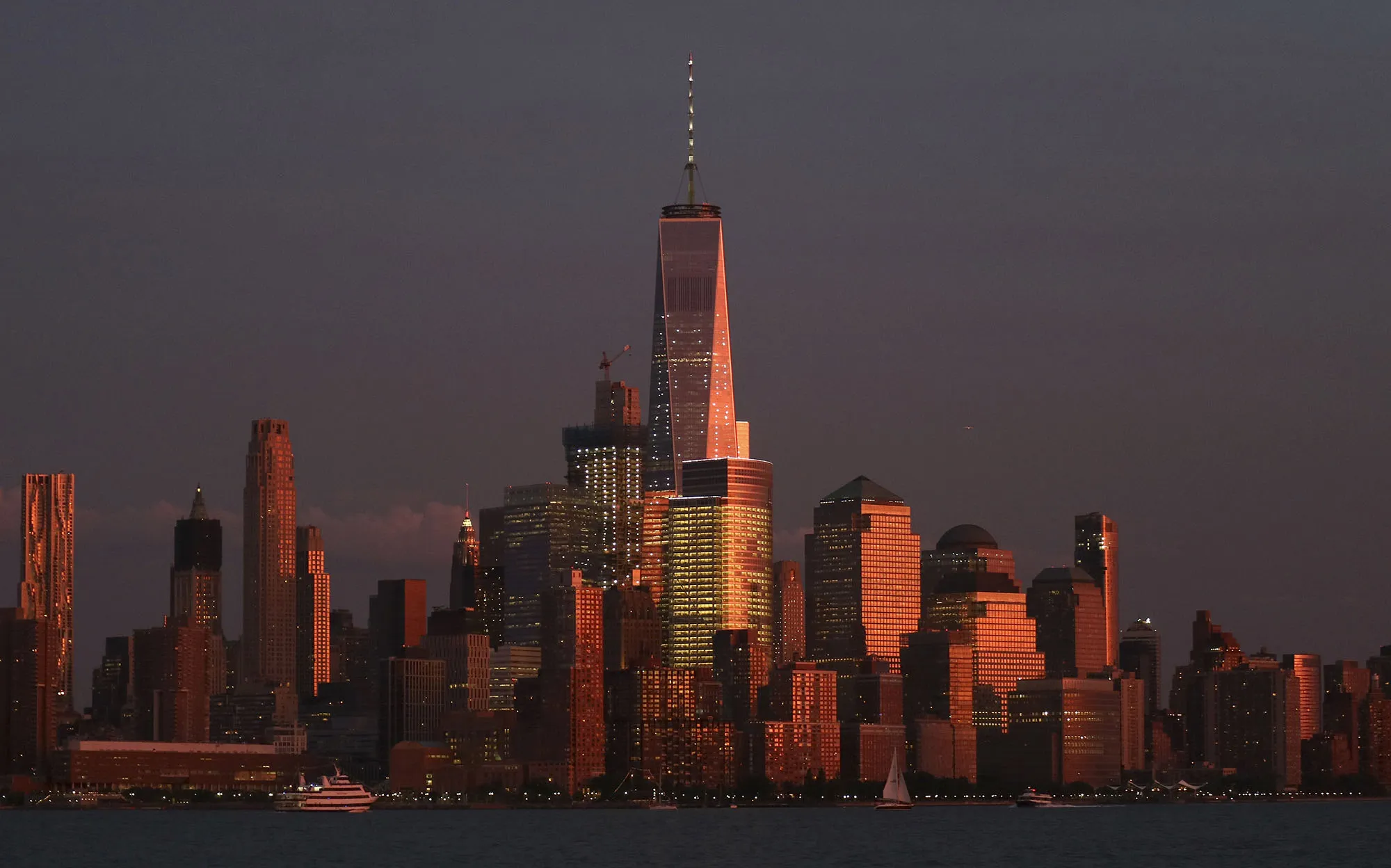
Steps away are the 9/11 Memorial & Museum, the Oculus, Brookfield Place, and waterfront paths. A short ride brings you to Battery Park, the Staten Island Ferry, and ferries to Liberty and Ellis Islands.
Walk east to the Brooklyn Bridge, north to City Hall, or explore Tribeca and SoHo for food, galleries, and shopping—an easy add‑on to your Observatory day.
Why this view matters
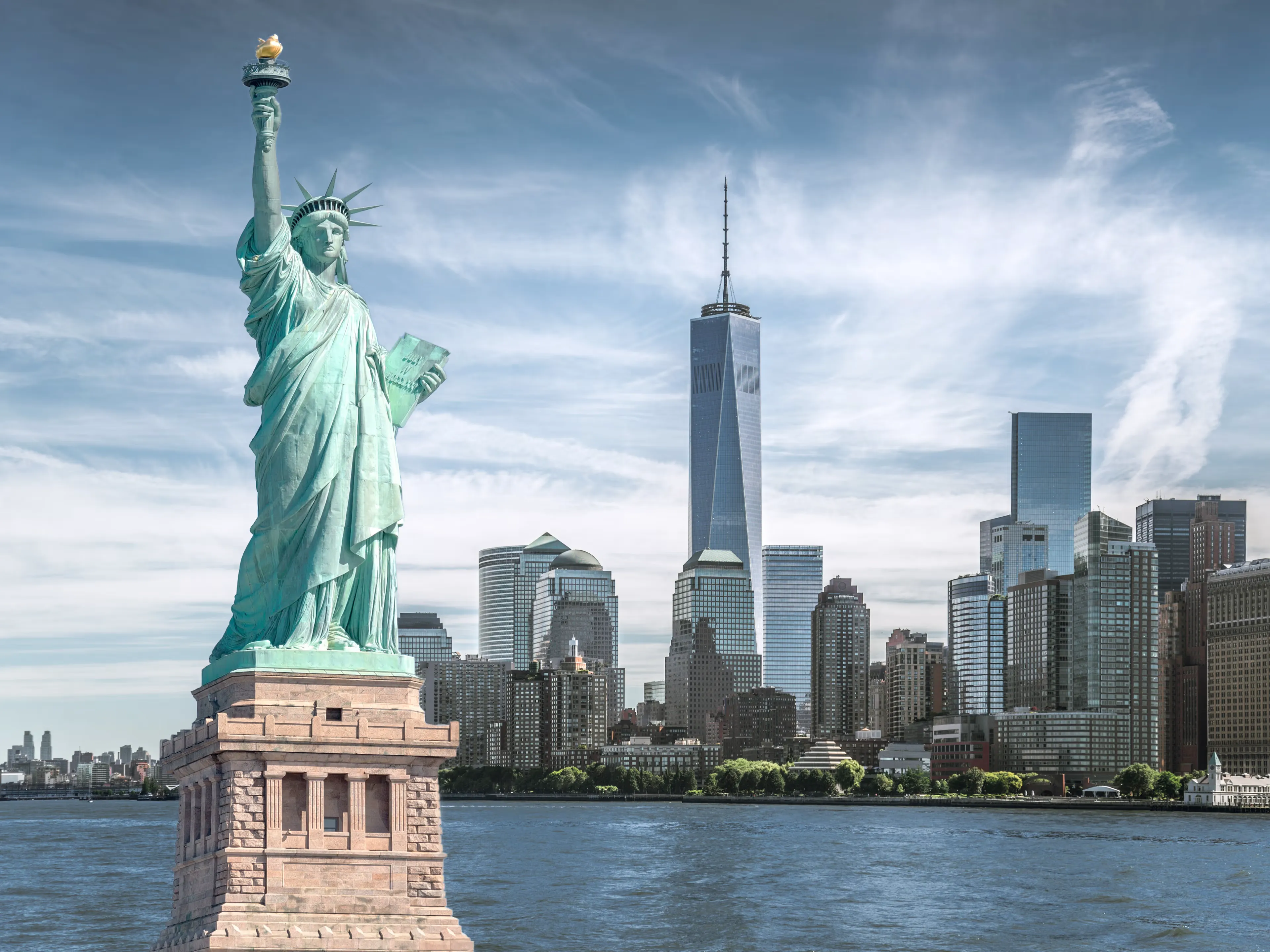
From here, New York’s complexity becomes legible—bridges, neighborhoods, waterways, and landmarks align like a living atlas. Looking out helps you look inward too: at the city’s resilience, the way communities weave together, and the everyday motion that gives New York its beat.
A visit isn’t just about a high vantage point. It’s about perspective—seeing how the city connects and how stories from every borough meet on the horizon.
Table of Contents
Origins of the site & skyline
Here at the southern edge of Manhattan, the island narrows to a prow—pointing toward the harbor, the Statue of Liberty, and the Atlantic horizon. For centuries, ships arrived and departed from piers that stitched New York to the wider world. Financial exchanges, warehouses, and neighborhoods rose and fell with waves of migration and industry, and the skyline grew in purposeful layers of steel and glass.
From this vantage point today, you trace the story of the city by sight: the grid fanning north, bridges lacing boroughs together, ferries drawing chalk‑white lines across water, and neighborhoods forming a mosaic of cultures. Below, the World Trade Center campus blends architecture and memorial spaces, inviting visitors to look outward with curiosity and inward with reflection.
One World Trade Center: design & ascent
One World Trade Center, designed by Skidmore, Owings & Merrill, anchors the rebuilt World Trade Center site as a symbol of resilience and openness. A crystalline form rises from a square base, twisting into an octagon and tapering toward a glass spire. Its height—reaching a symbolic 1,776 feet—nods to the year of American independence while its engineering integrates strength, safety, and state‑of‑the‑art sustainability.
As the tower climbed, its crown took shape as a place to look out and reconnect with the city’s expanse. The Observatory opened with an experience that mirrors New York’s energy: an ascent that compresses centuries into seconds, a theater reveal that pairs cinematic flair with real‑time views, and floors where stories from the streets below meet open sky.
The Observatory experience
Your visit unfolds as a smooth sequence: friendly wayfinding through the World Trade Center campus, a swift security check, and then the Skypod elevators—wall‑to‑wall visuals whisk you upward as the city grows beneath you. Doors open to the See Forever Theater, where light, sound, and motion charge the atmosphere before the curtains lift and the real skyline unfurls.
On the observation floors, the city becomes a map you can walk: bridges to the east, the harbor to the south, the Palisades and beyond to the west. Ambassadors at City Pulse point out neighborhoods and landmarks, updating the view with stories—from food scenes and music haunts to architectural highlights and moments in New York’s history. It’s part orientation, part celebration, and entirely New York.
Technology: Skypod & See Forever
The Skypod system climbs 102 stories in under a minute. As you rise, immersive screens sketch New York’s skyline growth—from low‑rise shoreline to skyscraper capital—making the elevator ride a time capsule of urban transformation.
In the See Forever Theater, a short, high‑energy sequence blends music, motion, and city scenes. The finale is a favorite: the reveal slides away and the actual skyline appears—no special effects needed. You step out to 360° views where the city itself is the spectacle.
Neighborhoods beneath your feet
Directly below lies a patchwork of neighborhoods: Tribeca’s cobblestones and warehouse lofts, SoHo’s cast‑iron façades, Chinatown’s bustling streets, and the canyons of the Financial District. To the east, the Brooklyn and Manhattan Bridges arc across the river; to the south, ferries skip toward Staten Island and Liberty Island; to the north, the Empire State Building and Midtown rise like beacons.
From 1,250 feet, the city’s daily rhythms become visible—the shift of light across rooftops, tiny yellow taxis threading avenues, ballfields and pocket parks punctuating the grid. You don’t just see New York; you understand how it works as a living, breathing organism.
Architecture, art & meaning
The World Trade Center campus brings together architecture and art in a layered environment. The Oculus by Santiago Calatrava rises like a white winged form over a multilevel transit hub. Public art animates plazas, and pathways connect offices, shops, and memorial spaces with waterfront promenades. The effect is civic in spirit—designed for movement, reflection, and daily life.
For many visitors, the area carries profound meaning. The Observatory looks outward over the city’s future while the memorial below honors lives and legacies. It’s a place where people gather to look, remember, and keep moving—New York style.
Transit & access in Lower Manhattan
Lower Manhattan is one of the best‑connected corners of the city. The Oculus links PATH trains to multiple subway lines, while Fulton Center gathers A/C/2/3/4/5/J/Z a short walk away. Street‑level wayfinding and elevators make navigating the campus straightforward for all visitors.
If you’re arriving from New Jersey, PATH trains glide directly to WTC. From uptown, frequent subways head downtown along Broadway and Seventh Avenue. Buses serve Church Street, West Street, and nearby corridors for crosstown or local rides.
Safety, accessibility & visitor flow
The full experience—from entry and security to elevators and observation floors—supports accessible routes. Staff can assist with elevators and seating when needed; restrooms and amenities are designed for ease of use.
Like many landmark attractions, the Observatory manages crowd flow with timed entry. Arriving early and traveling light streamlines your journey. Operational adjustments may occur during severe weather or special events—always check live updates.
Moments, seasons & special events
Every season paints the skyline differently. Winter brings crystalline clarity, spring reveals fresh greens along parks and waterfronts, summer sunsets stretch into glowing blue hours, and autumn turns treelines to amber against steel and glass.
Occasionally, special events and commemorations animate the campus and the city at large. Check the calendar for extended hours, seasonal programming, or unique skyline moments.
Tickets, passes & planning
Book timed entry online to secure your slot and choose upgrades that match your pace—priority lanes, flexible rescheduling, or bundled experiences.
City tourist passes may include Observatory access or discounts. Compare benefits and blackout dates to find the best fit for your trip.
Sustainability & operations
One World Trade Center integrates sustainable design and robust building systems—from efficient mechanicals to smart glass—supporting comfort, safety, and reduced environmental impact.
Operationally, timed entry and digital ticketing help manage visitor flow, while staff training keeps experiences smooth even at peak hours.
Nearby landmarks & museums
Steps away are the 9/11 Memorial & Museum, the Oculus, Brookfield Place, and waterfront paths. A short ride brings you to Battery Park, the Staten Island Ferry, and ferries to Liberty and Ellis Islands.
Walk east to the Brooklyn Bridge, north to City Hall, or explore Tribeca and SoHo for food, galleries, and shopping—an easy add‑on to your Observatory day.
Why this view matters
From here, New York’s complexity becomes legible—bridges, neighborhoods, waterways, and landmarks align like a living atlas. Looking out helps you look inward too: at the city’s resilience, the way communities weave together, and the everyday motion that gives New York its beat.
A visit isn’t just about a high vantage point. It’s about perspective—seeing how the city connects and how stories from every borough meet on the horizon.